Refrigerator Leaking Water on Floor
Is your refrigerator leaking water on the floor? Find the real cause, from a clogged defrost drain to a loose ice maker line, and fix it fast.
Need appliance repair? Call now for same-day service.
Call +1 (888) 206-0056You step into the kitchen and feel water under your socks. The fridge looks fine. The food is cold. But there is a puddle spreading across the floor. A refrigerator leaking water on floor is one of those problems that looks scary and usually has a simple cause. Most leaks trace back to a handful of parts. This guide helps you find yours, fix what you can, and know when to call for help.
Refrigerator Leaking Water on Floor? Start Here
Before you touch anything, mop up the water and lay down a towel. Water on the floor is a slip hazard and it can damage wood and laminate. Then do two quick things. First, pull the fridge forward just enough to see behind it. Second, check whether the water is coming from inside the fridge, from underneath it, or from the back near the water line. That one observation cuts the suspect list in half.
Leaks from inside the fridge usually mean a clogged defrost drain or a bad door gasket. Water underneath the fridge usually means a cracked drain pan or a drain pan that overflowed. Water at the back near the wall usually means the ice maker water line or the water filter housing. Once you know the zone, work through the causes below.
The Number One Cause: a Clogged Defrost Drain
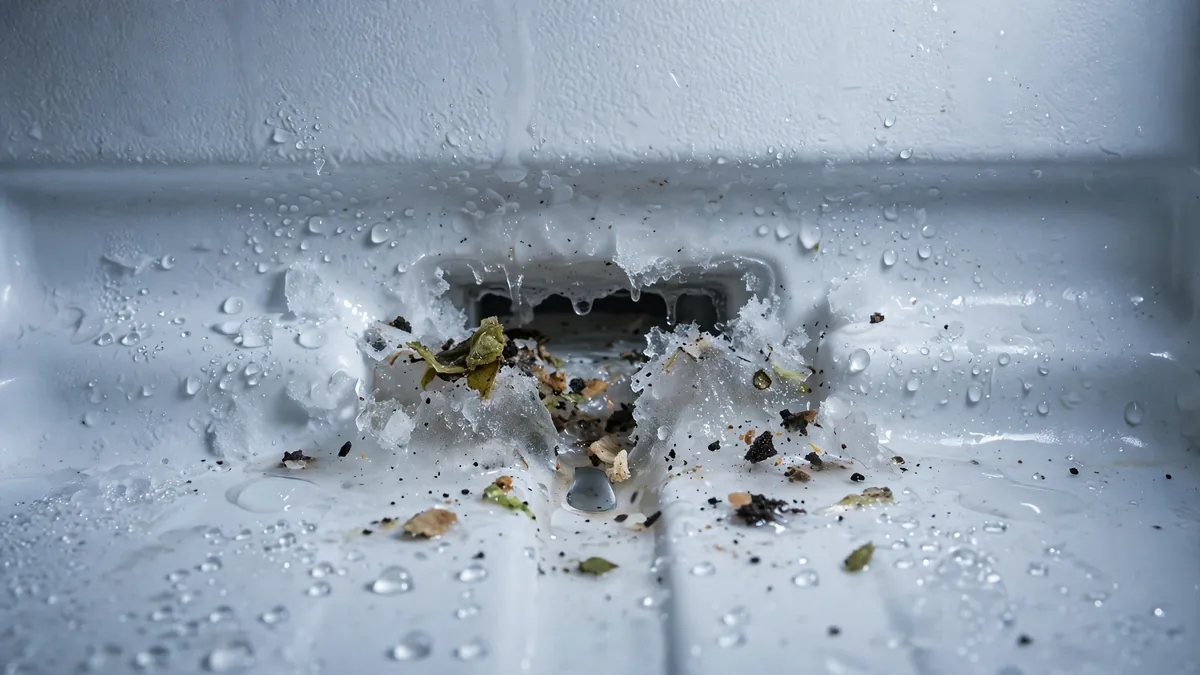
Every frost free refrigerator melts frost off its evaporator coils on a schedule. That melt water is supposed to flow down a small drain hole, through a tube, and into a drain pan under the fridge where it evaporates. When that drain clogs with food bits or freezes shut, the water has nowhere to go. It backs up into the fridge, pools under the crisper drawers, and eventually spills out onto the floor.
This one cause explains most indoor fridge leaks. The good news is that clearing the drain is a simple job. The steps are further down in this guide.
Other Common Causes
If the defrost drain is clear, work through these next.
A Bad or Dirty Door Gasket
The door gasket is the rubber seal around the fridge door. It keeps warm room air out. When it gets dirty, warped, or torn, warm moist air leaks in around the edges. That moisture condenses on the cold interior walls and drips down to the floor of the fridge, then out under the door.
Run your finger along the whole gasket and look for cracks, tears, or flattened spots. Close the door on a dollar bill and try to pull it out. If it slides out with no resistance, the seal is weak in that spot. Clean a dirty gasket with warm soapy water first. A torn gasket needs replacing. This is also a common reason fridges struggle to stay cold, which our fridge not cooling guide covers in more depth.
A Leaking Ice Maker Water Line
Fridges with ice makers or water dispensers have a water line running from your home plumbing to the back of the fridge. These lines can crack, kink, or work loose at the fittings. A slow drip at a fitting can run down the back of the fridge and pool on the floor where you first notice it.
Find the shutoff valve, usually behind the fridge or under the sink, and turn the water off. Then inspect the full line. Plastic lines crack with age. Copper lines kink if the fridge was pushed back too hard. Tighten loose fittings gently. Replace a cracked line rather than patching it. If the leak is coming from the ice maker assembly itself rather than the line, our ice maker guide walks through that side of the problem.
A Cracked or Overflowing Drain Pan
The drain pan sits under the fridge and catches defrost water. It is designed to let the water evaporate on its own. A cracked pan leaks straight onto the floor. A pan that overflows usually means the fridge is producing too much defrost water, which points back to a door seal problem letting in moist air.
Pull the front kick plate off and slide the pan out. Look for cracks and check whether it is full. A full pan on a fridge that otherwise works fine is a sign the compressor area is running hot or the humidity is very high. Empty it, clean it, and watch whether it fills again.
A Mis-Seated Water Filter
If the leak started right after you changed the water filter, the filter is the prime suspect. A filter that is not twisted in fully, or the wrong filter for the model, lets water seep past the seal. Remove the filter and reinstall it carefully until it clicks or seats fully. Check the filter housing for cracks while you have it out. A cracked housing needs a technician.
An Unlevel Fridge
A fridge that tilts forward lets door condensation and defrost water run toward the front instead of toward the drain. It also keeps the doors from sealing well. Set a level on top of the fridge. The front should sit very slightly higher than the back so doors swing shut on their own. Adjust the front leveling feet until it reads right.
Why Is My Refrigerator Leaking Water Inside?
Water pooling inside the fridge, usually under the crisper drawers or on the shelves, has a shorter suspect list. Start with the defrost drain. Find the drain hole on the back wall of the fridge section. It is often tucked behind a small cover or under the crisper drawers. If you see ice or gunk in it, you found the problem.
Also check the door gasket using the dollar bill test above. And look at where food sits. Items pushed hard against the back wall can block the drain or freeze to it, and thawing food packages can drip. Keep food an inch away from the back wall.
Step by Step: Clear a Clogged Defrost Drain
Unplug the fridge before you start. You will need a turkey baster or large syringe, warm water, and a towel.
- Move food out of the way and find the drain hole on the back wall of the fridge section.
- Clear any visible debris from the hole with a cotton swab or soft brush.
- Fill the turkey baster with warm water and squeeze it into the drain hole. Repeat until water flows freely down the drain.
- If the drain is frozen solid, leave the fridge unplugged with the doors open for two to three hours to thaw it, then flush again.
- Check the drain pan under the fridge. Empty it if it filled during the flush.
Do not use a wire or sharp tool to poke the drain. You can puncture the drain tube and turn a simple clog into a real repair.
When to Stop and Call a Pro
Most fridge leaks are doable for a careful homeowner. Stop and call a technician if the leak comes from a sealed part of the water system, if the filter housing is cracked, or if water keeps appearing after you cleared the drain and checked the gasket. Also call if the fridge is leaking and not cooling properly at the same time. That combination can mean a bigger problem, and running the fridge while it struggles can cause food loss. Our parent guide on why the freezer is cold but the fridge is warm helps you sort the cooling side.
Puddle Keeps Coming Back?
You cleared the drain, checked the gasket, and tightened the water line, but the floor is wet again. That means the leak is coming from a part you cannot reach or a seal that needs replacing. Book refrigerator repair and a technician will trace the water to its source in one visit. Call +1 (888) 206-0056 for same day and next day slots. We serve Milwaukee, Sacramento, and Grand Rapids. Pick your city in areas we serve to see local scheduling. Water leaks get worse with time, so sooner is better than later.
Frequently asked questions
Why is my refrigerator leaking water on the floor?
The most common cause is a clogged defrost drain. Water from the defrost cycle cannot drain away, so it pools inside the fridge and spills out onto the floor. Other common causes include a bad door gasket, a leaking ice maker water line, a cracked drain pan, or a water filter that is not seated right.
Why is my fridge leaking water inside, under the crisper drawers?
Water pooling under the crisper drawers almost always points to a clogged or frozen defrost drain. The drain hole sits at the back of the fridge section, usually under the evaporator cover. When it clogs, defrost water has nowhere to go and collects on the fridge floor instead.
Can a bad door gasket cause a refrigerator to leak water?
Yes. A torn or dirty door gasket lets warm, moist room air into the fridge. That moisture condenses on the cold walls and drips down. You may see water on the floor near the door and frost building up inside. Clean the gasket first. If it is torn or will not seal, replace it.
My ice maker water line is leaking. What should I do?
Find the water shutoff valve behind or under the fridge and turn it off right away. Then check the plastic or copper line running to the ice maker for cracks, kinks, or loose fittings. Tighten loose connections by hand plus a quarter turn. Replace cracked plastic lines. Turn the water back on slowly and watch every joint for drips.
How do I unclog a refrigerator defrost drain?
Unplug the fridge first. Find the drain hole at the back wall of the fridge section. Clear visible debris with a cotton swab. Then flush the drain with warm water using a turkey baster or syringe. If the drain is frozen solid, let the fridge sit unplugged with the doors open for a few hours to thaw it.
Broken appliance? We're one call away.
Same-day appliance repair across 37 cities. Upfront pricing, written warranty, and an honest repair-or-replace answer on every job.
Call +1 (888) 206-0056