Dryer Heating Element Replacement
Learn how to test and replace a dryer heating element step by step. Covers safety, tools, part costs, and when a DIY fix beats calling a pro.
Need appliance repair? Call now for same-day service.
Call +1 (888) 206-0056Your dryer tumbles for an hour and the clothes come out cold. The breaker is fine. The vent is clear. The likely culprit is a dead dryer heating element. This guide shows you how to test it and replace it yourself. You will learn what tools you need and what the part costs. You will also learn when to call a technician instead.
How a Dryer Heating Element Fails
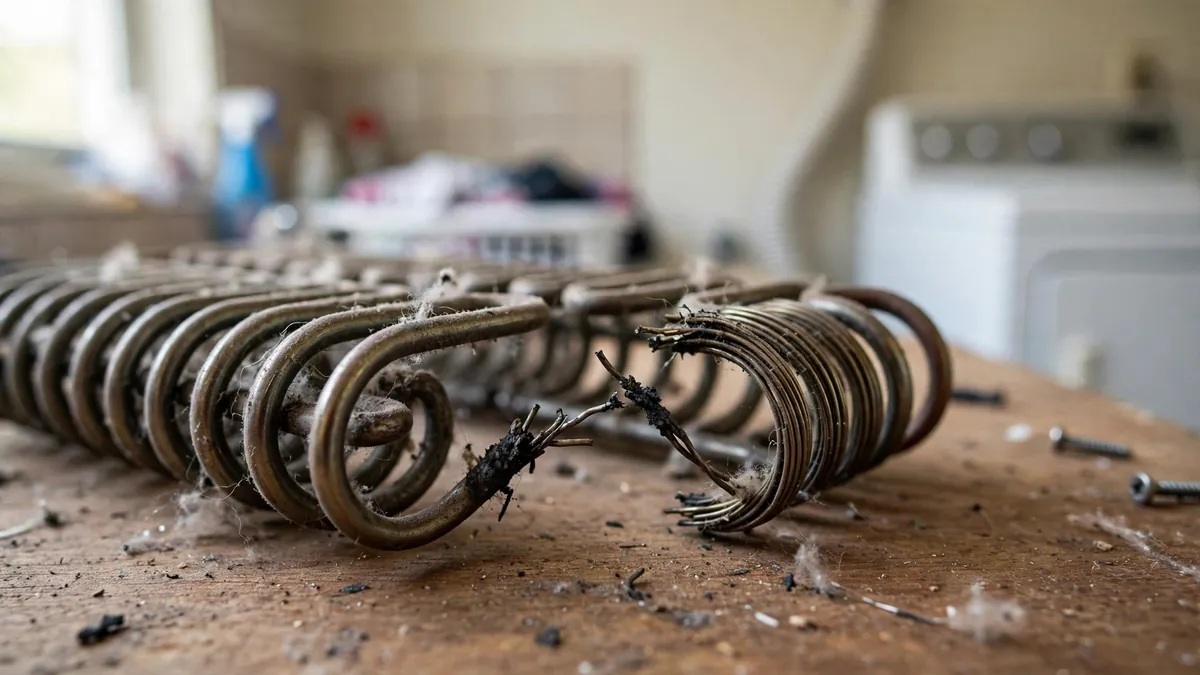
A dryer heating element is a metal coil that glows hot when electricity runs through it. Air blows across the coil and into the drum. The coil breaks over time from heat cycles and vibration. Once it snaps, no current flows. The drum still tumbles. The motor still runs. But nothing gets hot. A broken coil shows no continuity on a meter. That is the test that decides everything.
This is a part-specific fix. If you have not checked the basics yet, start with our dryer not heating guide. It covers the breaker, the vent, and the thermal fuse first. Come back here when the element is the suspect.
Signs Your Heating Element Is Dead
Match your symptom to this list before you open anything.
- The dryer runs and tumbles normally but produces no heat at all.
- Clothes need two or three cycles to dry, and the air feels cool.
- The dryer heats for a few minutes, then goes cold mid cycle.
- You see a visible break or blister in the coil through the housing slots.
- The thermal fuse tested good and the vent is clean, but still no heat.
Gas dryers never have heating elements. They use a gas burner with an igniter. If your gas dryer will not heat, the element sections below do not apply. Our dryer not heating guide covers gas burner problems.
How to Test a Dryer Heating Element
Test before you buy. A twenty dollar multimeter saves you from replacing a good part. Work through these steps in order.
Step 1: Cut the Power
Unplug the dryer from the wall. Electric dryers use 240 volts. That voltage can kill. Do not rely on the breaker alone. Pull the plug and keep it in sight while you work. If the dryer is hardwired, turn off the breaker and tape it off. Test that the machine is dead before you touch anything.
Step 2: Reach the Element
The element sits behind a panel. On most Whirlpool, Maytag, and Kenmore dryers, it is behind the back panel. On most Samsung and LG dryers, you go in through the front after removing the top. Check your manual for the panel layout. Remove the screws and set the panel aside. Take a photo of the wire positions before you touch them. The photo saves you during reassembly.
Step 3: Test for Continuity
Set your multimeter to the lowest resistance setting. Touch one probe to each element terminal. A good element reads roughly 10 to 20 ohms. The exact number varies by brand and wattage. What matters is that you get a reading. No reading, or an infinite reading, means the coil is broken. The element is dead. Also check each terminal to the metal housing. Any reading there means the coil is shorted to ground. Replace it either way.
Step 4: Test the Thermal Fuse
Find the small white plastic fuse on the blower housing or the element duct. Test it for continuity the same way. A good fuse reads near zero ohms. A blown fuse reads infinite. A blown fuse often dies alongside a failed element from the same overheating event. If the fuse is blown, hunt for the cause. A clogged vent is the usual one. Clear it before you install new parts.
How to Replace a Dryer Heating Element
The element is out. The new one is in the box. Here is the swap.
Step 5: Remove the Old Element
Disconnect the wires from the element terminals. Your photo from step two shows where they go. Remove the screws holding the element housing. Slide the old element assembly out. Compare it side by side with the new one. The shape, terminal positions, and mounting holes should match exactly. If they do not, you have the wrong part. Stop and check the model number.
Step 6: Install the New Element
Slide the new element into the housing. Secure it with the original screws. Reconnect the wires to the matching terminals. Nothing should feel loose. A loose high-voltage connection arcs and burns. Double-check each terminal. Reinstall the panel you removed. Plug the dryer back in.
Step 7: Run a Test Cycle
Run the dryer empty on high heat for ten minutes. Open the door mid cycle and feel for heat. The air should be hot, not warm. Watch the first full load after that. Clothes should dry in one normal cycle. If the dryer still runs cold, the problem was never the element. The control board or the motor centrifugal switch may be at fault. That is technician territory.
How Much a Heating Element Costs
Parts are cheap. Labor is the variable.
- Heating element part: $30 to $90 for most brands.
- Element plus housing assembly: $60 to $150 for Samsung and LG.
- Thermal fuse: $5 to $15, often replaced at the same time.
- DIY total: $30 to $150 in parts.
- Professional replacement: $150 to $350 with parts and labor.
Get a flat quote before any work starts. The diagnostic fee should be credited toward the repair. Our appliance repair cost guide breaks down typical prices for every common fix.
DIY or Call a Pro?
Replace the element yourself when the dryer is electric, the part is available, and you own a multimeter. The job takes 30 to 60 minutes for a first timer. It needs basic hand tools and patience with panel screws.
Call a technician when the dryer is gas. Call when the new element still runs cold. Call when the wiring looks burned. Call when the control board is suspect. Board-level diagnosis needs experience and a live-voltage test. The Consumer Product Safety Commission warns that faulty appliance repairs can cause shock or fire. Unplug the machine before you touch anything inside it.
When the Element Is Not the Problem
A dead element is one of several no-heat causes. If your new element did not fix it, work back through the chain. Breaker, outlet voltage, vent, thermal fuse, high-limit thermostat, timer or control board. Our dryer not heating guide walks the full diagnostic in order. For a pro to finish the job, book dryer repair. Call +1 (888) 206-0056 for same day and next day slots. Most dryer jobs finish in one visit because techs carry common elements and fuses.
Frequently asked questions
How do I know if my dryer heating element is bad?
The dryer runs and tumbles but the clothes come out cold. Check the breaker and the vent first. Then unplug the dryer and test the element with a multimeter. No continuity across the terminals means the element coil has broken. That is a failed element.
How much does it cost to replace a dryer heating element?
The part itself runs $30 to $90 for most brands. A professional replacement with parts and labor typically costs $150 to $350. Samsung and LG element assemblies sit at the higher end. Whirlpool and GE elements are usually cheaper.
Can I replace a dryer heating element myself?
Yes, on most electric dryers. It is one of the friendliest appliance repairs for a handy owner. Unplug the machine, remove the back or front panel, swap the element, and reassemble. Skip the DIY route on gas dryers. They use a burner system, not an element, and gas work needs a pro.
Should I replace the thermal fuse with the heating element?
Often yes. A failed element can overheat and blow the thermal fuse, which is a one-time safety device. If your fuse is blown, find out why before replacing it. A clogged vent is the usual culprit. Fix the vent or the new fuse will blow again.
How long does a dryer heating element last?
Most elements last 8 to 12 years in a family home. Heavy use shortens that. Rental units and large families can burn through an element in five years. A clogged vent is the biggest killer. It traps heat and cooks the coil.
Broken appliance? We're one call away.
Same-day appliance repair across 37 cities. Upfront pricing, written warranty, and an honest repair-or-replace answer on every job.
Call +1 (888) 206-0056